RESPONSIBLE
INTERNATIONALISATION
2026 EAIE SUMMER FORUM
2026 Summer Forum | Responsible Internationalisation
Responsible internationalisation: Mapping the status quo
An agenda for responsible internationalisation
Bridging cooperation, communication and security
Four pillars of responsible student mobility
Counting students or shaping leaders? A CULTURE-based rethink
Shifting the lens:
A focus on social responsibility
Ukrainian institutions in wartime:
Partners, not beneficiaries
Fostering responsible South–South–North partnerships
A question of values
In conversation with
Jamil Salmi
Glasgow: a global city of innovation
The reading room
Thank you for reading
2026 EAIE Summer Forum
Member magazine
ARTICLE
BRIDGING COOPERATION, COMMUNICATION AND SECURITY
“Responsible institutional leadership involves resisting purely market-driven logic and ensuring that financial considerations do not overshadow educational missions."
COUNTING STUDENTS OR SHAPING LEADERS? A CULTURE-BASED RETHINK
“When mobility is treated merely as a quantitative indicator – number of outgoing students, destinations, partnerships signed – its transformative educational potential risks being diluted."
FOSTERING RESPONSIBLE SOUTH–SOUTH–NORTH PARTNERSHIPS
“Responsible internationalisation represents a paradigm shift from transactional global engagement to transformative global cooperation."
INTERVIEW: IN CONVERSATION WITH JAMIL SALMI
“Regional cooperation, inclusive forms of internationalisation and long‑term capacity building should be prioritised alongside mobility."
The issue in front of you unpacks one of the current buzzwords in international education – responsible internationalisation – and explores what it means to different stakeholders across regions.
Responsible internationalisation can be understood as the pursuit of international collaboration in ways that consider integrity, ethics, academic freedom, reciprocity and attentiveness to geopolitical security dynamics. After reading this issue you may form your own, perhaps broader, understanding that resonates with you and your context.
There is little doubt that security concerns in certain areas are legitimate and deserve careful attention. Yet the growing tendency to extend these concerns across the entire academic landscape raises an important question: Should fears surrounding a limited number of fields justify restrictions on openness, trust and academic freedom? Higher education institutions have long thrived precisely because academic collaboration is rooted not in political alignment, but in shared intellectual curiosity. Scholars co-operate across borders to exchange ideas, challenge assumptions and advance knowledge as a shared public good – often independently of the governments under which they live. To conflate academic partnerships with political loyalties risks undermining one of the very foundations of higher education.
The challenge facing institutions today is therefore not whether security matters – it clearly does – but how to address genuine risks without eroding the openness and international collaboration that have always been central to academic and scientific progress. This issue features articles that will inspire you with effective practices, perspectives and policies towards this goal.
The first article will be of interest to those seeking clarity on responsible internationalisation in the European context. Courtney Hartzell provides an informative overview of developments in European policy frameworks, national approaches and tools such as the KIWi Compass, developed by DAAD, which supports institutions in assessing the risks and benefits of cooperation.
If you need to take a step back to understand the broader landscape, delve into An agenda for responsible internationalisation by Tommy Shih, which translates the concept to the institutional level. Leaders aiming to balance security and inclusion may consider adopting transparent governance and participatory communication practices. Higher education leadership wishing to go a step further will find inspiration in the contribution by Maria Angelica Nivia Latorre and Laura Juliana Mendoza Romero.
For practitioners, the mobility-focused articles in the next section offer insights into how to enact student mobility responsibly. Eunjung Riauka draws on four guiding pillars of responsible internationalisation, while the jointly written article by María Alejandra Maldonado Adrian and Sara Betina Sousa Ferreira examines “responsible mobilities” within their specific project context.
Rosalyn Eder shifts the reader's perspective towards reflexive ethical internationalisation. From Ukraine, Irina Sikorska and Olena Koziievska explore how responsible internationalisation can support a balance between global engagement and local responsibility.
Following, global (South-South-North ) partnerships are the focus of Vidya Rajiv Yeravdekar, Elizabeth Colucci, Olusola Oyewole and Mervin Bakker, who conceptualise responsible internationalisation as a paradigm shift from transactional global engagement to transformative global cooperation, fostering more equitable knowledge exchange.
In an opinion piece, Douglas Proctor takes readers on a more philosophical journey, exploring the values underlying internationalisation and how shared understandings can create shared responsibilities.
The interview with Jamil Salmi, a Moroccan higher education policy expert, engages the readers with challenges such as regionalism, inequity and financing – and, I promise, ends the issue on a positive and hopeful note.
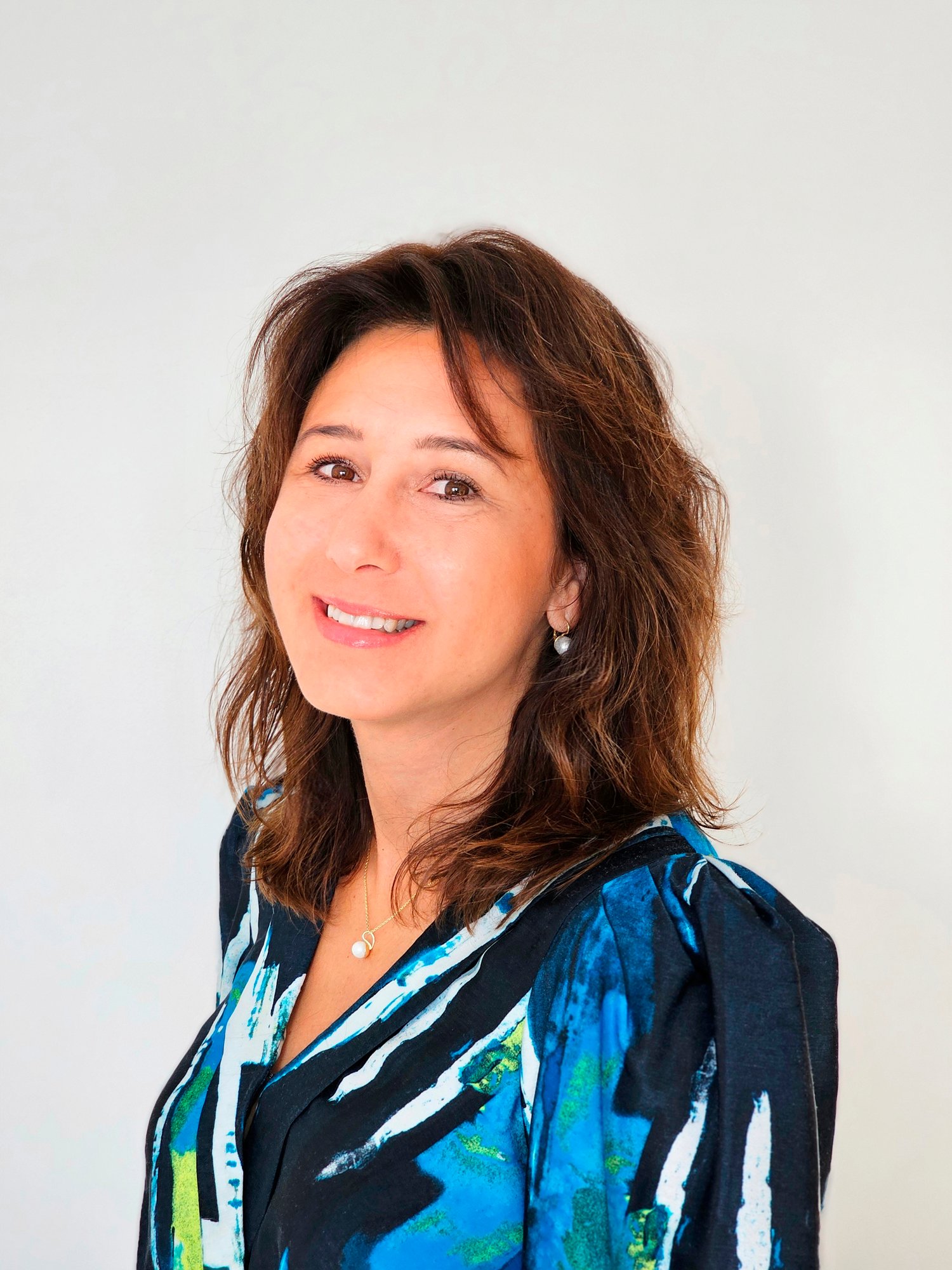
Eva Janebová, Editor
publications@eaie.org
Policy and Project Coordinator, Academic Cooperation AssociationCourtney’s work explores themes ranging from organisational identity to responsible internationalisation. Based in Brussels, she holds a master’s degree from Boston, Massachusetts, and is currently pursuing her PhD at Ghent University in Belgium. Her international experience includes living and working in Germany, India and Turkey, enriching both her academic perspective and professional approach. Outside of her research, she enjoys running, hiking and painting watercolours.
Assistant Vice-President, Global Engagement & Partnerships, York UniversityDouglas specialises in international strategy and delivers EAIE training on strategic planning for internationalisation. He also brings extensive expertise in transnational education. Fluent in English and French, he combines his professional work with a passion for singing, his favourite pastime.
Director of Higher Education Policy and Programs, OBREAL GlobalElizabeth’s work sits at the intersection of higher education internationalisation and development cooperation, with a focus on evolving models of academic and political collaboration and the role of tertiary education. She is fluent in English, French, Spanish and Portuguese, and has a strong interest in travel (especially enotourism), linguistics and multilingualism.
Director of International Learning and Safety Abroad, Western University Eunjung specialises in international student mobility, safety abroad, and exchange partnerships, informed by both professional expertise and lived experience. She is committed to expanding access to inclusive international learning opportunities for students from all backgrounds. Outside of her work, she enjoys DIY and home improvement projects, as well as cooking and baking.
Director of the Center for International Education, Mariupol State UniversityWith 20 years of experience in advancing international education in Ukraine, Irina leads efforts to foster institutional internationalisation. Her work spans shaping international strategy, developing global partnerships and initiatives and coordinating international projects. She is fluent in Ukrainian, Russian and English. Outside of her professional role, she enjoys travelling and reading.
International-Incoming Mobilities Officer, CESI Graduate School of EngineeringLaura studied modern languages, translation, cultural studies and international relations. During her academic journey and teaching experience, she developed a strong interest in the internationalisation of educational institutions and its many dimensions. She is fluent in English, French, Spanish and Portuguese. Outside of her professional interests, she enjoys dancing, painting, reading and a good cup of coffee.
Director of International Relations and Cooperation, Universidad Católica San PabloMaría Alejandra’s work sits at the intersection of Public International Law and the internationalisation of higher education. She is currently a researcher in training in the doctoral programme in Law and Economics at the CEU International Doctoral School in Spain, other than a full-time law professor at UCSP. Beyond her academic pursuits, she is a wife and mother of two, and enjoys the creative pursuits that bring people together, including dancing and reading.
Erasmus+ programme coordinator International, École PolytechniqueDrawing on academic and professional experience across South America and Europe, Maria serves as an Erasmus+ Coordinator at École Polytechnique. In this role, she oversees international mobility programmes and works closely with institutions and partners throughout Europe. Beyond her professional work, she is passionate about cultural exchange, enjoying everything from discovering new cuisines to participating in cultural events that broaden her perspective.
Executive Director, European Association for International EducationWith 25 years of experience in international education, Mervin has held a range of roles across three continents and diverse organisations. His expertise has evolved from marketing and recruitment to capacity development, scholarship programmes, strategy and partnerships. In his free time, he enjoys running, playing tennis and cooking for family and friends.
Head of the Secretariat of the Committee for Education, Science and Innovations, Verkhovna Rada of UkraineWith over 20 years of experience in Ukraine’s higher education sector, Olena, in her current role, plays a key role in shaping legislation and advancing reforms in education and science. She is a strong advocate for cross-border collaboration as a driver of resilient and future-oriented education systems. In her spare time, she enjoys drawing as a way to unwind and express her creativity.
Secretary-General, Association of African UniversitiesOlusola brings extensive experience in higher education leadership and internationalisation. He is a strong advocate for partnerships that enhance the global standing of African institutions and is committed to mentoring emerging scholars while promoting innovation-driven approaches to education. Outside his professional work, he enjoys reading, reflective writing and engaging in conversations on leadership and societal transformation.
Head of International Office, Paracelsus Medical Private UniversityA firm believer in the power of education as a driver of social change, Rosalyn is a passionate advocate for equity and inclusion in and through education. Her expertise spans diversity, equity and inclusion, as well as qualitative research. She speaks Tagalog, English, German and Spanish, and has recently rekindled her passion for literature, visual arts, music and dance.
Liaison and International Initiatives Coordinator, Universidad Católica San PabloSara Sousa holds a degree in International Relations from Universidade do Minho and a Master's degree in political communication from Universidade do Porto, both in Portugal. She is dedicated to promoting responsible internationalisation and supports academic departments in integrating global and intercultural perspectives into their work. Outside of her professional role, she enjoys travelling, reading and simple pleasures such as coffee and chocolate.
Director, Forum for Responsible Internationalisation and Research SecurityTommy Shih has worked as a policy advisor and independent expert for international funding bodies, the European Commission and national government agencies. His research focuses on the dynamics of international collaboration in science and technology, with particular emphasis on innovation policy, global research networks, and the governance of academic partnerships in a context of geopolitical change.
Pro Chancellor, Symbiosis International University Vidya has been a strong advocate for the internationalisation of Indian higher education on the global stage. She holds a Postgraduate degree in Medicine, a degree in Law and a PhD from India focused on the internationalisation of higher education in India. Her pioneering work in social outreach, innovation and women’s empowerment reflects a deep commitment to building institutions that serve broader societal needs. Outside of her professional work, she enjoys reading and cycling.
Published by European Association for International EducationPO Box 11189, 1001 GD Amsterdam, the NetherlandsE-mail: info@eaie.org, publications@eaie.orgwww.eaie.org
Editor: Eva JanebováPublications Committee: Eva Janebová (Chair), Ragnhild Solvi Berg, Queenie Lam, Arnim Heinemann, Sonja Knutson
Director, Knowledge Development and Research: Laura E. RumbleyHead of Marketing and Communications: Léa BasinKnowledge Development Coordinator: Cecilia AlbèDesigners: Nhu Nguyen, Maeghan Dunn, Julia Gerrits
Copyright © 2026 by the EAIE All rights reserved. Extracts from Forum may be reproduced with permission of the EAIE. Unless stated otherwise, opinions expressed by contributors do not necessarily reflect the position of the EAIE.ISSN 1389-0808