SKILL-BUILDING FOR THE FUTURE
2025 EAIE WINTER FORUM
2025 Winter Forum | Skill-building for the future
IS HIGHER EDUCATION READY FOR GEN Z’S REAL-WORLD SKILLS?
SKILLS IN TRANSITION: PREPARING STUDENTS FOR A GREENER FUTURE
DESIGN THINKING: PUTTING HUMANITY AT THE HEART OF STEM
TAIWAN’S NEW SOUTHBOUND POLICY: A MODEL FOR SKILLS CIRCULATION
CRISIS AS A CLASSROOM:BUILDING SKILLS FOR A VOLATILE WORLD
FROM CAMPUS TO COMMUNITY:CULTIVATING KNOWLEDGE AMBASSADORS
THE SKILLS THAT MATTER MOST
BY THE NUMBERS: WHY SOFT SKILLS MATTER MORE TO STUDENTS
BUILDING FUTURE-READY GRADUATES: A COMPETENCY-BASED APPROACH
COIL
A GOLDEN STRATEGY FOR INTERCULTURAL COMPETENCE
IN CONVERSATION WITH
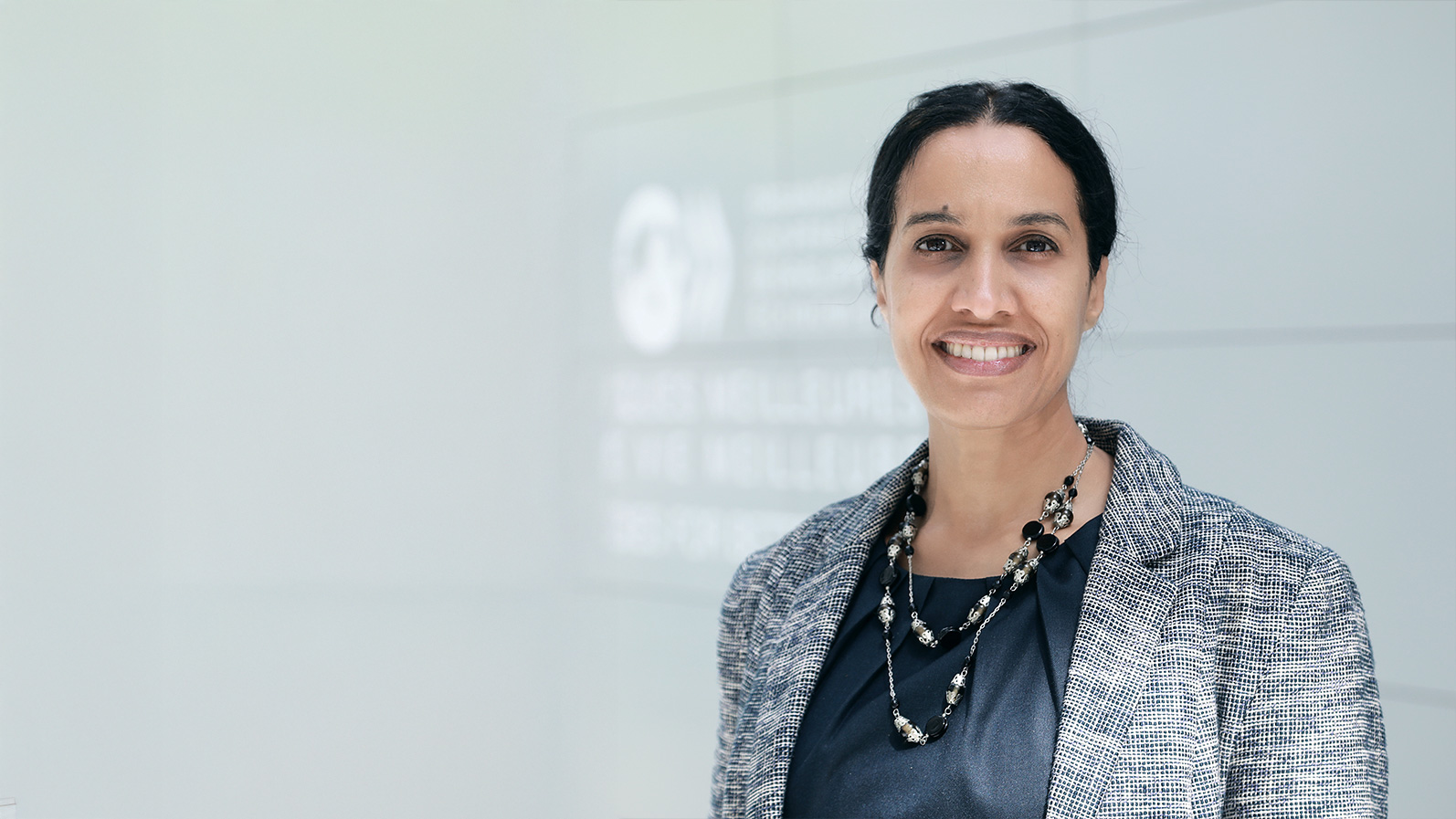
EL IZAMOHAMEDOU
TOP 10 UNMISSABLE EXPERIENCES FOR GLASGOW VISITORS
EAIE Volunteer Voices
THE READING ROOM
2025 EAIE Winter Forum
Member magazine
ARTICLE
“In a world where artificial intelligence is levelling access to information, the real value of higher education must shift from what students know to what they can do, and ultimately who they are becoming in the process”.
“There has been a growing recognition that students’ competencies beyond the traditional classroom are valuable and should be integrated into their formal education”.
“International exchange and student mobility programmes are a significant way institutions can support students to develop their intercultural competence".
"Higher education must develop stronger partnerships between education providers, industry and workers to navigate the twin digital and green transitions".
This issue brings together a truly global range of perspectives, illustrating that the European Commission’s vision of a “Union of Skills” – aimed at boosting competences and strengthening Europe’s competitiveness – is not a challenge unique to Europe, but one shared across higher education systems worldwide.
The issue opens with a strong voice from students and concludes with valuable insights from policymakers – framing both where we are and where we need to go.
Whenever academia debates what and how to teach, we cannot do so without students at the same table. We must ask them directly: ''What do you need for today’s world, and how can we work together to prepare you for it?''.
In their article, Duarte, Nestola and de Wilde articulate clearly what Generation Z expects: “more than job-ready skills,” emphasising instead human skills – the ability to work across cultures, think systemically, communicate with empathy, manage ambiguity and sustain personal well-being amid uncertainty. For them, human skills are not abstract ideals, yet they often remain marginalised – confined to extracurricular activities rather than embedded in formal curricula. Their critique of higher education institutions: that “institutions still tend to reward individual achievement over collaboration, theoretical expertise over applied insight and rigid disciplinary silos over interdisciplinary” – seems strikingly familiar. Were we not voicing these same concerns twenty or thirty years ago?
Their message is clear: “only when students are involved not just as stakeholders but as partners can institutions become more democratic, relevant and resilient.” Perhaps we no longer have a choice but to take this seriously.
In our call for articles, we asked whether prioritising technical skills risks diverting attention from the “human side” of education. Several contributors affirm that it does – and explore how human skills enable individuals to navigate an increasingly complex, interconnected world.
Pengo and Dermati from the European University Foundation highlight the growing importance of green soft skills – environmental awareness, responsibility and stewardship. Similarly, Mbambu Kabeya, Weyomona Makiese, Biba Kalengo and Mukeba Yakasham describe how international partnerships have inspired engineering education that is both socially conscious and environmentally responsible.
Hsueh’s contribution offers valuable insights for those working with international students, examining how intentional skill-building in Taiwan supports the integration and retention of Southeast Asian students. This approach – linking micro-credentialing with regional industrial strategies – offers lessons for others.
Ghazaryan illustrates how Armenian institutions have transformed its diaspora into a powerful educational resource in the aftermath of conflict, leveraging professionals abroad into co-educators, mentors and guest lecturers, exposing students at home to global standards and practices.
From Colombia, Rincón and Guarín showcase examples of how students, alumni and academics can act as powerful agents of knowledge diplomacy and global cooperation.
In “The Skills that matter most”, Boaretto, Kurppa and Retsch present the Coimbra Group’s work in defining ten core employability skills. These skills guide the design of new curricular and co-curricular programmes and the development of intercultural competencies in students preparing for study abroad. Similarly, van den Berg’s contribution from Chile demonstrates how embedding a model for developing and assessing intercultural competence within COIL projects enables international learning for all students.
Moving from design to implementation, Tripathi and Joshi from India share what happens when an institution deliberately bridges disciplinary silos to define shared graduate attributes – such as civic responsibility – and then operationalises these through concrete pedagogical strategies and assessment tools.
Finally, Mohamedou reminds us that preparing students for an interconnected world is a global challenge that requires efforts to minimise inequalities in access to skill-building opportunities across and within societies.
Together, these contributions reaffirm that skills development in higher education is not only about employability, but about humanity, democracy and our collective capacity to shape a sustainable future.
Eva Janebová, Editor
publications@eaie.org
Head of the Career Service Office, University of PadovaAnna loves good food, company, TV series and yoga. Her 20-year career has helped students in their career development. She is part of the Employability Working Group of the Coimbra Group.
Head of the Career Centre, University of WürzburgAnnette is Vice-Chair of the Employability Working Group. With 10 years advising university leadership, she leads skills programmes. She enjoys outdoor activities, fitness, books and classical music.
Director of International Relations at Diego Portales UniversityAnoek has worked in the higher education field in Chile for over 10 years. Anoek speaks Dutch, English and Spanish fluently, loves to cycle and is a fan of nature and the mountains.
Assistant Professor, Department of International Business and Foreign Languages, Minghsin University of Science and TechnologyChai-Ming’s career in education spans 15 years. Today, he champions education as a bridge between local workforce needs and international opportunities for students.
Teaching Assistant & Researcher, University of KinshasaEmmanuel is passionate about using Earth observation and academic exchange to support solutions and empower students. He enjoys reading, travelling and exploring new cultures.
Work Life Specialist, University of TurkuA fan of animals, board games and Taylor Swift’s music, Fanny supports students with job-seeking and career planning. Coordinating international internships and grants (Erasmus+), she is also part of the Employability Working Group of the Coimbra Group.
Junior Policy and Research Officer at the European University FoundationFrancesca is always on the lookout for a book club wherever she lives. Her previous roles have included volunteering at a Polish educational NGO and as a trainee at the European University Foundation.
Policy and Project Officer | UNICA – Network of Universities from the Capitals of EuropeFrederica’s expertise lies in international cooperation and education, with a strong focus on project management, communication and more. Outside of work, she is an adrenaline seeker (skydiving is next on her list!).
Lead Global Education at Leiden University Medical CenterAs a graduate of the University of Amsterdam, Guido has spent the past two decades building and leading global partnerships and mobility ecosystems. Guido is a recipient of the University of Amsterdam Honorary Medallion.
Associate Director, Office of Global Engagements at Plaksha UniversityHarshita is actively engaged and vocal on issues related to the higher education sector in India and abroad. She loves travelling and reading bedtime stories to her three-year-old daughter.
President of the Academy of Sciences and Engineering for Africa Development (ASEAD)Kabeya’s expertise lies in fluid mechanics, thermal energy and renewable energy systems. Beyond academia, he enjoys writing and publishing technical books.
Director, Internationalisation and Development Department, National Polytechnic University of Armenia (NPUA)Bringing over a decade of experience in higher education management, project leadership and international collaboration, Lilit is committed to building globally connected academic environments. She is enthusiastic about children’s books and balcony gardening.
Physician, General Reference Hospital Pierre Fokom of Kimbanseke Louisette’s experience as a supervising physician in HIV care sparked her interest in international education and design thinking. She is fluent in French and English and enjoys listening to music in her spare time.
Associate Professor, Plaksha UniversityBlending biomedical engineering research, Rucha’s research spans tissue engineering and inclusive pedagogy. She is also the author of a Springer-published book, a certified diver and a badminton champion.
Policy and Research Officer, European University FoundationWith 3 years of experience in Erasmus+ funded projects, Salome is a Policy and Research Officer at the European University Foundation. She enjoys a plant-based lifestyle and is an avid train traveller.
Vice President for International Affairs, Universidad del RosarioSandra is driven by collective building, exchanging knowledge and experiences with people from diverse backgrounds. With over 20 years of experience, she leads comprehensive internationalisation processes.
Trainer, Researcher, Author, ALDEASFluent in three languages and beginning her career as a bilingual education teacher, Sandra is dedicated to global stakeholder engagement for ethical purposes. Outside of work, you can find her dancing, hiking or enjoying children’s literature.
Assistant Lecturer, Mechanical Section, Institut Supérieur des Techniques Appliquées (ISTA-Kinshasa)Shaloom’s interest in international education is driven by the belief that academic exchange and international standards can strengthen the quality of education in the DRC. He is passionate about discovering new cultures and different ways of life across the globe.
Published by European Association for International EducationPO Box 11189, 1001 GD Amsterdam, the NetherlandsE-mail: info@eaie.org, publications@eaie.orgwww.eaie.org
Editor: Eva JanebováPublications Committee: Eva Janebová (Chair), Ragnhild Solvi Berg, Queenie Lam, Arnim Heinemann, Sonja Knutson
Director, Knowledge Development and Research: Laura E. RumbleyHead of Marketing and Communications: Léa BasinKnowledge Development Coordinator: Cecilia AlbèDesigners: Nhu Nguyen, Maeghan Dunn
Copyright © 2025 by the EAIE All rights reserved. Extracts from Forum may be reproduced with permission of the EAIE. Unless stated otherwise, opinions expressed by contributors do not necessarily reflect the position of the EAIE.ISSN 1389-0808