EAIE FORUM MEMBER MAGAZINE
EUROPEAN UNIVERSITIES ALLIANCES
SUMMER 2025 EDITION
2025 Summer Forum | European Universities Alliances
THE EUI TURNS FIVE: ASSESSING ITS IMPACT AT ALL LEVELS
A JUGGLING ACT: MANAGING THE COMPLEXITY IN EUI ALLIANCES
STRATEGIC PLANNING IN A CHANGING WORLD: MISSION IMPOSSIBLE?
SEED FUNDING AND MATCHMAKING: HOW TO ENGAGE ACADEMICS
EUROPEAN UNIVERSITIES ALLIANCES: WHAT’S IN IT FOR STUDENTS?
‘APPLIED ALLIANCES’ AND THE EUROPEAN UNIVERSITIES INITIATIVE
IN CONVERSATION WITH
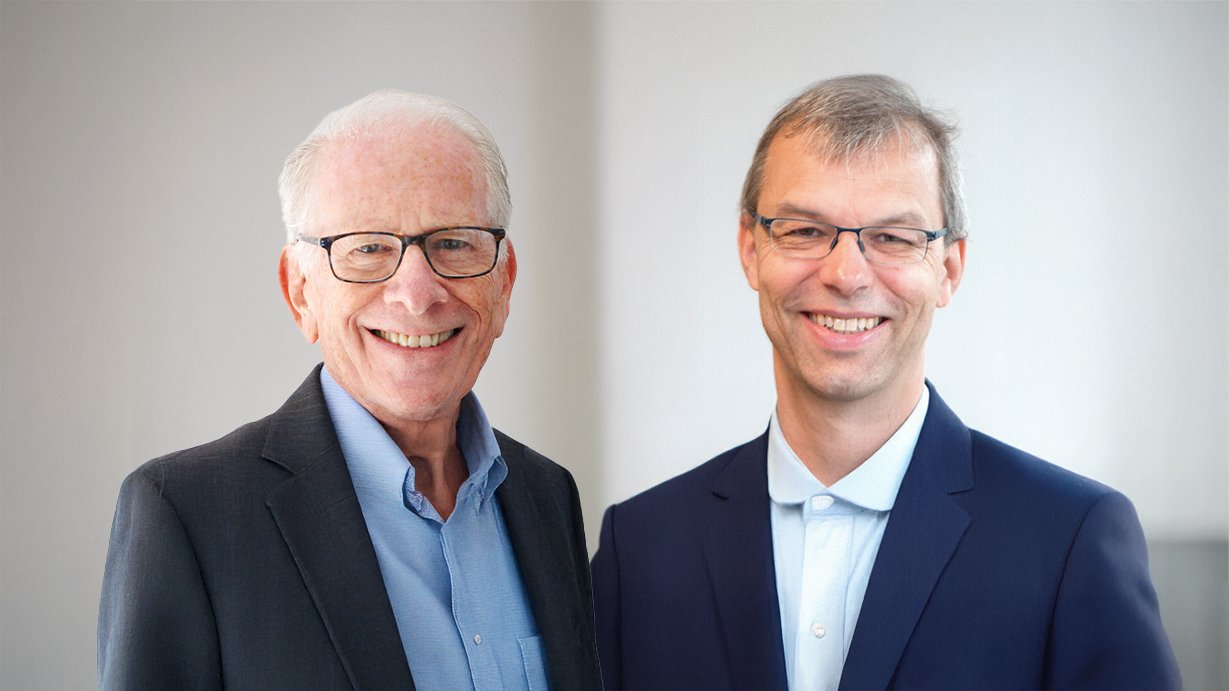
ALLAN E. GOODMAN AND JAN PALMOWSKI
WILL THERE BE A FIFTH FREEDOM AT LAST?
LIBRARIES AND OPEN SCIENCE: A CORNERSTONE OF COLLABORATION
TOWARDS AN INTEROPERABLE EUROPEAN EDUCATION INFRASTRUCTURE
AGORAS
ACCELERATING ALLIANCES COLLABORATION
GOTHENBURG AND WEST SWEDEN
Summer Forum 2025
Member magazine
ARTICLE
“The EUI reflects the EU’s evolving vision for higher education, which now integrates social and political goals alongside economic ones.”
“To successfully implement large-scale initiatives like the EUI, institutions must move beyond top-down communication strategies.”
“University alliances are forging new learning methods and European certifications to equip students with the tools to deal with global problems.”
“What's truly distinctive about this collaboration is its European context - the EU driving it not just with funding, but with a political framework.”
Senior Researcher, Swiss Federal University for Vocational Education and TrainingAgata has worked as an international student adviser in London, UK where her PhD topic idea on the access to higher education for refugees was born. Her research now focuses on collaboration in European higher education and vocational education and training.
Across Alliance Coordinator Besides it being her job, internationalisation and interculturalism are in Agata’s DNA. An Italian born in Switzerland and raised in Germany, she has lived in more than twenty places in four different countries.
Postdoctoral Researcher, University of St. Gallen Alina is a globe-trotter who has studied, worked and lived in Germany, France, Switzerland, the USA and Uruguay. When she's not delving into political science, Alina enjoys hiking, reading dystopian fiction, and volunteering with the Young European Federalists.
Secretary General, Unite! European Universities AllianceAndreas has been engaged in several European networks and projects throughout his career. He is always ready for the next interesting debate and enjoys various sports whenever possible.
Head of Communications, FilmEU European UniversityAnna is passionate about building meaningful connections between students, researchers, and institutions through creative communication.
Una Europa Senior Local Lead, University of Helsinki Anna Stina has been working with diverse tasks connected to higher education international collaboration for close to 20 years. She's always bubbling with new ideas and projects and loves it when people join her in working on them.
Doctoral Researcher in Education, University of OxfordAntonin’s background is in film and philosophy, which initially led him to work in the field of artistic creation and social action before turning to academia. He is currently completing his DPhil in Oxford on current developments in the EU’s higher education policies.
Chief Communications Officer, EUTOPIA European University AllianceArmando has been a publisher and diplomat for over 30 years. A compulsive reader, he has co-authored several books on ancient Roman art. He is a father of three girls and a slave to two dogs.
Innovation manager Education, SURF Christien is passionate about internationalisation because research and education do not stop at national borders. She loves to read literature and to travel Europe by bike or on foot, especially following pilgrimage routes.
Assistant Professor of Higher Education Policy at the University of TwenteDaniela is a first-generation student turned academic who studies higher education. Her research focuses on internationalization and academic freedom, and their intersection with policy, social inclusion, employability and quality assurance.
Head of the Una Europa Alliance Unit, University of Bologna Francesco has been working in the field of Internationalisation of higher education for over 20 years, a journey driven by his deep passion for European cooperation, education policy, and institutional development.
Task Lead, ENGAGE.EU Strategy 2035Hans-Georg has been ‘married’ to internationalisation and strategy for over 25 years. His passion is exploring Europe by bicycle every summer, and spending time with friends over dinner or a Trappist beer.
Associate Professor, Universitat Politècnica de Catalunya Jesús is an ICT expert involved in the Unite! Alliance and Project Coordinator for the aUPaEU European project. A father of four, he has lived in Spain, France and the UK.
Secretary General, European Association for the Applied Sciences in Higher EducationJohn is a boundary spanner, geographer, and father of seven who believes in the power of education for development.
Assistant Director for European Educational Initiatives, The University of BergenKatrine is passionate about internationalisation as a tool for quality in higher education. She is an avid podcast listener, listening to everything from geopolitics to true crime, music history and wine podcasts.
Head of Communications, CIVIS European University Alliance After 20 years as a journalist, María moved to Brussels a decade ago to start her career as a higher education communicator. She has studied in the Dominican Republic, the United States, France and Belgium.
Doctoral Researcher in Public Policy at Central European UniversityNadia has been passionate about comparative education policy since she moved from Croatia to the UK for studies at a young age. Since then, she has studied and worked on (higher) education policy across England, Germany, Belgium and Austria.
Secretary General, HEROES Alliance, Thomas More University of Applied SciencesIn addition to being a ‘dots connector and narrative weaver’ in international higher education, Piet is also Past President of the EAIE. He likes to relax by cooking and enjoying nature, music, and reading.
Secretary General, ENGAGE.EUNow located in the Netherlands, Sabine has worked in six different countries in leadership positions in higher education and the French diplomacy and cultural network since 2002. She has served in various EAIE elected leadership roles since 2016.
Project Manager, CIVICA Alliance LibrariesSophie has always worked in higher education, because she believes deeply in its essential role in shaping the future of our world. Outside of work, she loves discovering landscapes and local life in other countries.
Published by European Association for International EducationPO Box 11189, 1001 GD Amsterdam, the NetherlandsE-mail: info@eaie.org, publications@eaie.orgwww.eaie.org
Editor: Eva JanebováPublications Committee: Eva Janebová (Chair), Ragnhild Solvi Berg, Queenie Lam, Arnim Heinemann
Director, Knowledge Development and Research: Laura E. RumbleyHead of Marketing and Communications: Léa BasinKnowledge Development Coordinator: Cecilia AlbèDesigners: Nhu Nguyen, Maeghan Dunn
Copyright © 2025 by the EAIE All rights reserved. Extracts from Forum may be reproduced with permission of the EAIE. Unless stated otherwise, opinions expressed by contributors do not necessarily reflect the position of the EAIE.ISSN 1389-0808
This issue offers a rich and multifaceted exploration of a bold European experiment – one that tests the extent to which integrated collaboration can enhance student learning, teaching, research, innovation, societal engagement and talent development. It is an ambitious endeavour to define what 21st-century higher education can and should look like – and how it can succeed in addressing global challenges.
While this issue focuses on a European Union initiative, it would be a mistake to assume it holds relevance only for European audiences. On the contrary, the pioneering steps taken by European universities toward forming deeply integrated alliances offer inspiration and practical insights for institutions and policy-makers around the world seeking to elevate international partnerships to the next level. This is exemplified in a dynamic dialogue featured in this issue between two prominent leaders in international higher education: Jan Palmowski (The Guild) and Allan E. Goodman (IIE), who provide comparative European and American perspectives.
Even more significantly, European Universities Alliances (EUAs) represent a stronghold for shared, values-based higher education – an approach that may prove more resilient in the face of rising scepticism toward internationalisation and global academic collaboration. While the initiative may appear centred on research integration and educational mobility, its potential impact reaches much further.
The true significance of the EUAs may lie in their transformative influence on students’ personal and professional futures, their sense of European identity, and the long-term cohesion of European societies. These outcomes, while still emerging, underscore the scope and promise of this grand initiative.
This issue of Forum focuses on how the European Universities Initiative (EUI) is reshaping higher education across Europe. With over 570 universities involved and nearly half of the student population enrolled in institutions that are part of an alliance, the issue presents insights from both researchers investigating the impact and practitioners sharing concerns, inspirations, and lessons learned through direct experience.
With more than 60 alliances currently active, there is no one-size-fits-all model, making it nearly impossible to capture the full scope of the initiative in a single issue. Fortunately, there is also no need to do so. However, it is crucial to begin with an evidence-based perspective. Therefore, this issue opens with a section dedicated to recent research and practitioner-oriented articles focused on stakeholder engagement.
We also feature an insightful interview on the value of alliances, highlighting their significance for European higher education and offering inspiration for institutions beyond the EHEA. This is followed by practice-oriented contributions designed to foster stronger connections amongst partner institutions.
A research-based article by Daniela Craciun, Agata Lambrechts, Nadia Manzoni, Alina Felder-Stindt, and Antonin Charret outlines the significant structural, educational, and research-related changes introduced by EUAs – while also raising critical concerns about their long-term sustainability, given the current short-term funding model.
Meanwhile, PhD students Agata Mannino and Francesco Girotti offer an in-depth, evidence-based analysis of stakeholder engagement across 39 alliances (funded in 2019 and subsequently renewed). Their findings suggest that while stakeholder awareness of alliances is increasing, full understanding and effective participation are still lacking. They call for greater collaboration and co-creation of the alliance narrative – a theme further developed in Sabine Sainte-Rose and Hans-Georg van Liempd’s inspirational piece on strategic planning.
Their contribution also raises important critical questions, such as the increasingly common – yet potentially problematic – practice of creating new administrative units outside of existing international offices, and the need to ensure inclusivity in engaging all university stakeholders in alliance activities.
The European Universities Initiative is far from a superficial project. It demands significant structural and cultural change – a reimagining of the status quo across all university functions.
In this spirit, Anna Stina Sinisalo and Andreas Winkler share practical insights from the Una Europa and Unite! Alliances, focusing on grassroots academic engagement through initiatives such as seed funding and matchmaking activities, while the article by Anna Coutinho, María Isabel Soldevila Brea and Armando Uribe Echeverría offers practical strategies for engaging students in joint curricula and supporting their skill development.
Piet van Hove and John Edwards also emphasise the importance of skill development and introduce another vital aspect of the alliances: their amplified potential to foster connections with industry. While particularly relevant for universities of applied sciences, this collaboration potential is equally valuable for research-intensive institutions.
The second part of this issue centres on the theme of interconnectivity – described by Katrine Moland Hansen through the idea of the "fifth freedom": the seamless exchange of knowledge, data, research, and education across national borders. Three other articles explore concrete ways alliances can enhance this connectivity: Sophie Forcadell highlights the role of university libraries in facilitating open access to research data and educational resources; Christien Bok discusses the creation of digital ecosystems to support collaboration, and Jesús Alcober describes how digital infrastructure can promote meaningful engagement.
This issue does not claim to be a comprehensive overview of the current state of the EUA initiative. Rather, it offers a compelling starting point for further exploration and discussions – many of which may take place at the 2025 EAIE Conference and Exhibition hosted in Gothenburg.
With great appreciation to the authors for sharing their expertise with the EAIE readership community, and special thanks to Ragnhild Solvi Berg and the EAIE's Thematic Committee on European-funded programmes for their support and expert guidance on this issue.
Eva Janebová, Editor
publications@eaie.org
The European Universities Initiative is a flagship initiative of the European Education Area. It enables a new generation of Europeans to cooperate across languages, borders and disciplines, developing a strong European identity.
Minimum of 3 higher education institutions, from 3 EU member states or third countries associated to the Erasmus+ programme.
Alliances develop joint long-term strategies for education with, where possible, links to research and innovation to drive systemic, structural and sustainable impact at all levels of their institutions.
Alliances create and implement European inter-university campuses, where:
students, academics, university staff, researchers and lifelong learners enjoy seamless mobility (physical, virtual or blended) to study, train, teach, do research, work or share services across borders and disciplines
transdisciplinary and transnational teams of students, academics and external stakeholders tackle big issues facing Europe
students can design their own flexible curricula, leading to a European Degree
practical and/or work-based experience is provided to foster an entrepreneurial mind-set and develop civic engagement
the student body reflects the social, economic and cultural diversity of the population.
This introductory text has been sourced from: European Commission: Directorate-General for Education, Youth, Sport and Culture. (2024). European universities: a key pillar of the European education area. https://data.europa.eu/doi/10.2766/521265.
Grumbinaitė, I., Colus, F., & Buitrago Carvajal, H. (2025). Report on the outcomes and transformational potential of the European Universities initiative. European Commission: Directorate-General for Education, Youth, Sport and Culture, 93. https://data.europa.eu/doi/10.2766/32313